Why strength training matters as you age
From middle age, most people slowly lose muscle and strength unless they train for it. That loss shows up in everyday life: getting out of a low chair, carrying shopping, climbing stairs, catching your balance on a kerb. Strength training slows and often reverses it, at any age.
- Independence. Stronger legs make standing, walking and stairs easier.
- Balance and falls. Strength and balance work together to keep you steady.
- Bones and joints. Loading muscles also loads bones, and strong muscles support stiff joints.
- Energy and mood. Many people sleep better and feel more confident within weeks.
The World Health Organization's physical activity guidelines recommend that adults aged 65 and over do muscle-strengthening activities for all major muscle groups on two or more days a week, plus activities that challenge balance and strength on three or more days. You do not need a gym to start, but coaching makes it safer and faster.
Before you start: is it safe?
For most older adults, yes. Start light and build slowly. Check with your GP first if you have a heart or lung condition, recent surgery or a fall, uncontrolled blood pressure, diabetes that affects your feet, or joint pain that is getting worse.
Stop and get advice if you feel chest pain or pressure, unusual breathlessness, dizziness, or sharp joint pain. Normal muscle tiredness, and mild aching a day or two later, is expected.
A beginner strength routine for seniors
Do this routine two or three times a week, with a rest day in between. Use a sturdy chair, a wall and a light pair of dumbbells or filled water bottles. Start with one set of each exercise and build to two.
| Exercise | How to do it | Reps | Works |
|---|---|---|---|
| Sit to stand | From a chair, stand up without using your hands if you can, then sit back down slowly. | 8 to 12 | Legs, hips |
| Wall push-up | Hands on a wall at shoulder height, lower your chest towards the wall and push back. | 8 to 12 | Chest, arms |
| Step-up | Step onto a bottom stair holding the rail, then step down. Swap legs. | 8 each leg | Legs, balance |
| Calf raise | Holding a chair, rise onto your toes and lower slowly. | 10 to 15 | Calves, ankles |
| Bent-over row | One hand on a table, pull a light weight up towards your hip. | 8 to 12 each arm | Upper back |
| Side leg raise | Holding a chair, lift one leg out to the side and lower with control. | 8 each leg | Hips, balance |
| Overhead press | Seated, press light weights from shoulders to overhead. | 8 to 12 | Shoulders |
| Suitcase carry | Walk 10 to 20 metres holding a light weight in one hand, standing tall. Swap hands. | 2 walks each side | Grip, core, posture |
How hard should exercise for older adults feel?
Aim for the last two or three reps to feel hard but still smooth, with good form. On a scale of 1 to 10, that is about a 6 or 7. If you could do many more, it is too easy. If your form breaks down, it is too heavy.
How to progress
When two sets of 12 feel comfortable for a week, make one thing harder: a little more weight, a lower chair, a slower lowering phase or a second set. Change one thing at a time.
How often should seniors strength train?
Two or three sessions a week of 20 to 40 minutes is a strong start, in line with the WHO guidance above. Add daily walking and simple balance practice, such as standing on one leg near a bench while you wait for the kettle.
Strength training for over 60s: training with a coach
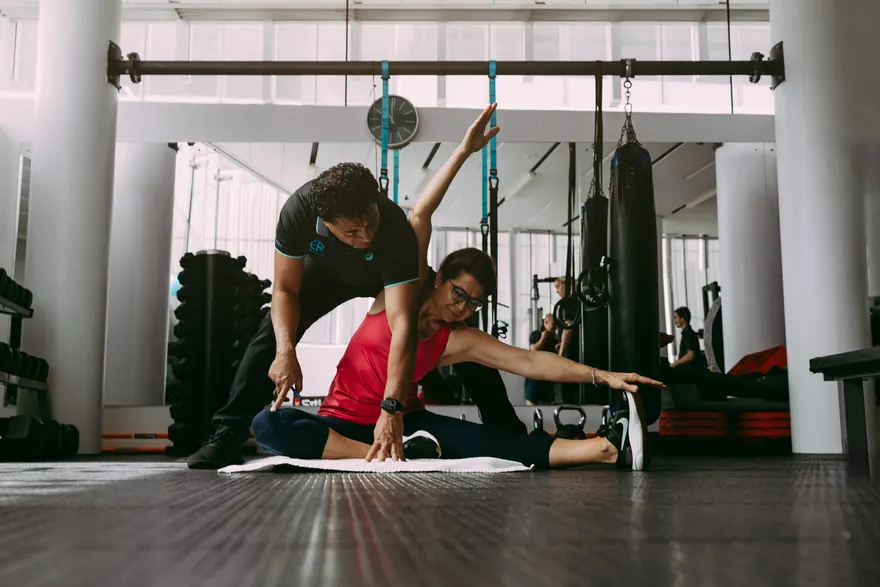
A coach checks your technique, adjusts exercises around sore joints and adds weight at the right time. At The Exercise Room in Parnell, our personal trainers work with all ages, and our limited membership means the gym is never crowded. If you have a health condition, Medical Fitness NZ, opening in Parnell, starts with assessment before any exercise is prescribed.
"I assumed that my regular golf, tennis and walking would be enough to keep me healthy and active and injury free... The workouts are tailored to your personal needs, fitness and goals."
Margot, aged 67, retired physical educator and Exercise Room member
Living with arthritis? Our guide to exercise for knee osteoarthritis shows how to adapt these moves. For women in their 50s, see strength training for women over 50.
Frequently asked questions
Is it too late to start strength training at 70?
No. People build strength well into their 80s and 90s. Start light, focus on good form and build up gradually.
Should seniors lift heavy weights?
Weights should feel challenging for the last few reps, not heavy from the start. With coaching, many older adults safely work up to moderate and heavier loads.
What is the best exercise for seniors?
The sit to stand is hard to beat: it trains the legs and hips you use every day. Pair it with a push, a pull and a carry for a balanced routine.
Can strength training help with balance?
Yes. Stronger legs and hips, plus regular balance practice, help you stay steady.
About this guide
This guide is written by The Exercise Room, a Parnell gym whose team includes personal trainers and an exercise scientist, led by director Emile Palmer, who has more than 30 years in health and wellness. Last reviewed November 2026. Training guidance follows the World Health Organization's physical activity guidelines and common coaching practice. It is general information: please check with your GP if you have a health condition. Corrections are welcome at info@theexerciseroom.co.nz.